
All countries
Morocco
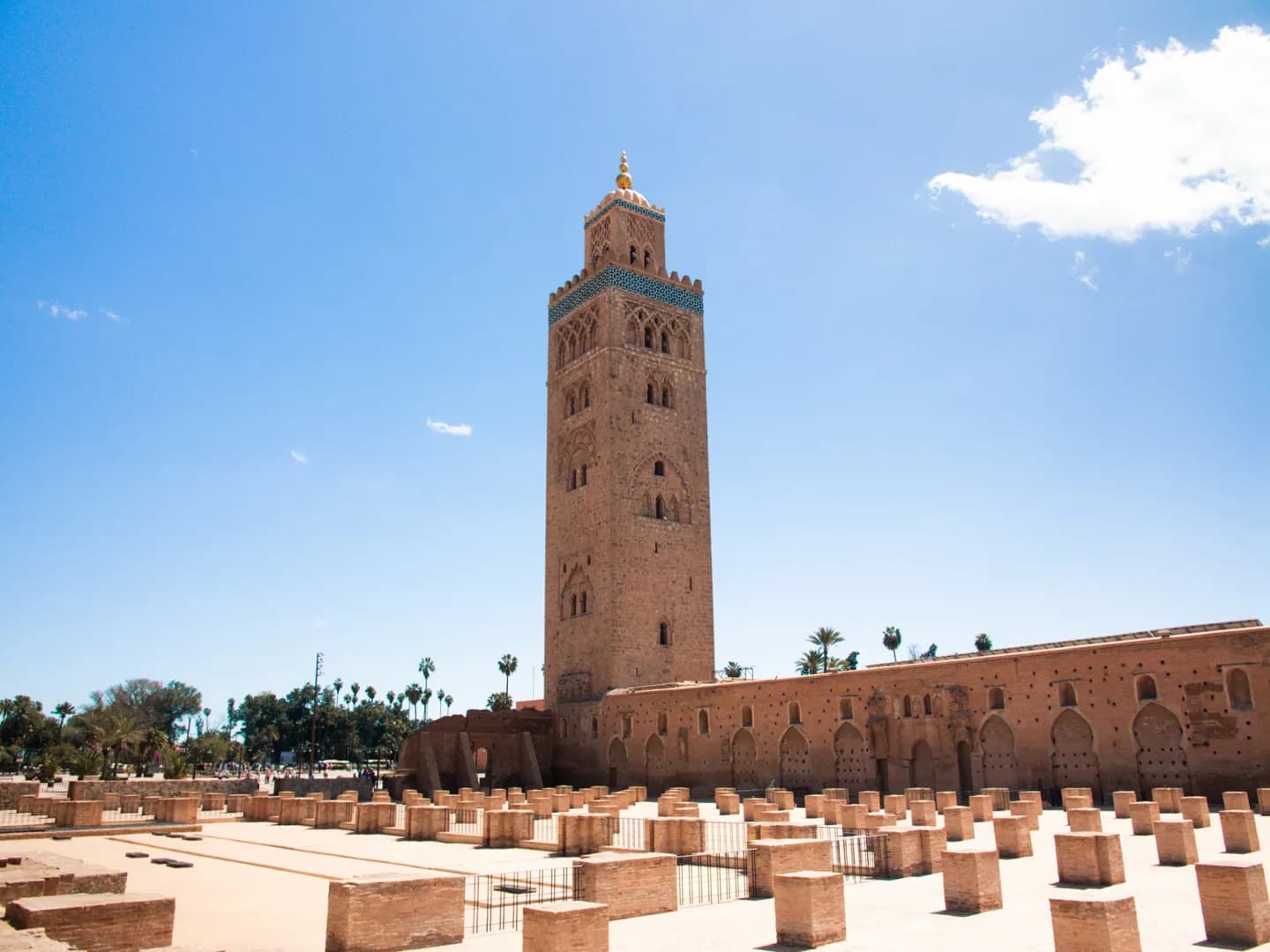
Wander through ancient medinas, ride camels across the Sahara, and taste the spices of Marrakech.
Everything you need to know before you travel to Morocco with Enroute54 — visa rules, health guidance, safety, money, languages and practical tips for Marrakech and beyond.
Quick facts
- Capital
- Rabat
- Languages
- Arabic and Berber
- Currency
- Moroccan Dirham (MAD)
- Climate
- Mediterranean with mild wet winters and hot dry summers. 35°C summer, 5°C in Sahara.
- Best time to visit
- March to May (spring) and September to November (fall).
- Visa
- Many nationalities do not require a visa for stays up to 90 days.
- Getting around
- Trains, buses, taxis, car rentals and domestic flights.
- Safety
- Generally safe, exercise caution in crowded markets and at night.
Travel FAQs
Entry & Visas
What are the passport validity requirements for Morocco?
Passports must have a validity of a minimum of 6 months after the intended date of departure and a minimum of 3 free pages for visa stamps.
Do I need a visa for Morocco?
American passport holders do not need a tourist visa for entry into Morocco for stays of up to 90 days and should hold proof of onward or return flights. All other passport holders should visit the Embassy of the Kingdom of Morocco website for the most current visa and immigration information.
Health & Insurance
Are any vaccinations required before traveling to Morocco?
There are no mandatory vaccinations required for US travelers entering Morocco. However, we recommend all travelers consult a healthcare provider before international travel for personalized recommendations.
Is travel insurance required for Morocco?
Yes. Travel insurance is mandatory for all trips with Enroute54. You must purchase comprehensive cover before traveling, covering all overseas medical costs (including medical repatriation and evacuation), the full cost of your trip and flights, and any overstay or additional expense due to incident or illness.
Safety
Is Morocco a safe destination for travelers?
Morocco is generally considered safe for international tourists, including visitors from the United States. As with any destination, remain aware of your surroundings and take common precautions: keep valuables secure, avoid poorly lit or isolated areas late at night, be cautious of pickpocketing in crowded markets, and use licensed guides when exploring historic districts.
Money & Payments
What currency is used in Morocco and how do I access money?
The official currency is the Moroccan Dirham (MAD). Cash is commonly used, especially in markets and smaller shops. Credit and debit cards are widely accepted in hotels, restaurants and larger stores, and ATMs are available in most cities and tourist areas. You may bring US dollars but will generally need to exchange them for dirhams at banks or currency exchange offices.
Are there currency restrictions for entering or leaving Morocco?
You are required to declare large quantities of cash (100,000 Moroccan dirhams, approximately 10,785 US dollars) upon entry into Morocco. The export of Moroccan currency is strictly prohibited.
Getting Around
How do I get around in Morocco?
In Marrakech, travelers can get around using local taxis, private drivers, or organized transfers arranged through the hotel or Enroute team. Ride-hailing apps are scarce and generally not reliable in Marrakech.
Staying Connected
Can I get mobile data and internet in Morocco?
SIM cards and MiFi devices are available at airports or local shops, usually requiring passport registration. Coverage is reliable in cities and tourist areas. If you would like a SIM on arrival, the Enroute team can assist and advise on the best data options.
Good to Know
Which airport do we use in Morocco?
For this trip, travelers arrive and depart from Marrakech Menara Airport (RAK).
What languages are commonly spoken in Morocco?
The most commonly used languages are Arabic, Berber (Tamazight) and French. English is increasingly spoken in tourist areas, hotels and by tour guides, making it relatively easy for international visitors to communicate.
Is alcohol available for travelers in Morocco?
Alcohol is available in Morocco, although the country has a predominantly Muslim population. Travelers can typically find it in hotels, licensed restaurants and bars in tourist areas. Public consumption outside licensed venues is discouraged.
What electrical outlets and voltage are used in Morocco?
Morocco uses 220-volt electricity and Type C and Type E plugs.
Is it safe to drink tap water in Morocco?
Tap water in Morocco is treated but may be unfamiliar to many visitors. Travelers are generally advised to drink bottled water to avoid potential stomach discomfort.
What emergency numbers should I know in Morocco?
Police: 19. Ambulance: 15. Fire services: 15. The US Embassy is located in Rabat, with a consulate in Casablanca, and can assist American citizens in emergencies.
Ready to go?
Build a custom itinerary of priced activities, or browse our curated experiences.